
The now-famous Russ recently invited a few of us at the office to enjoy some popcorn topped with brewer's yeast. As someone who brews beer, I was anticipating a wholly gross experience, but yeast on popcorn actually tasted quite natural and oddly familiar.
In this video segment of Nate's Plate, you'll see me, Russ, Bridgette and camera-woman Jordan.
Showing posts with label home brewing. Show all posts
Showing posts with label home brewing. Show all posts
Saturday, January 30, 2010

Tuesday, February 10, 2009
Homebrewing adventures: Pale chocolatey stout part three -- Bottling day!
I have to confess something. Last week, when I wrote that I was never going to write about homebrewing on a Tuesday, I was lying. I have a bunch of really good excuses too! Plus, I got an email yesterday saying something sure to stimulate the arteries was shipped to my house and it will definitely make up for this.
But what's more important is that 49 bottles of pale kinda chocolatey stout are now carbonating in bottles in a basement in Redford, Michigan. The best part is that the beer smells like Count Chocula. A non-carbonated room-temperature taste test indicates a mild chocolatey, sort of creamy flavor with very little hop bitterness. If our calculations are right, it's around 6% alcohol. Oh and we're probably going to call it Count Chocustout.
Sanitize your bottles (no twist-offs!), bottling bucket, racking cane, bottling wand, etc. Properly sanitizing everythingis a huge pain in the ass and wastes tons of our precious time takes patience and is a very important step!
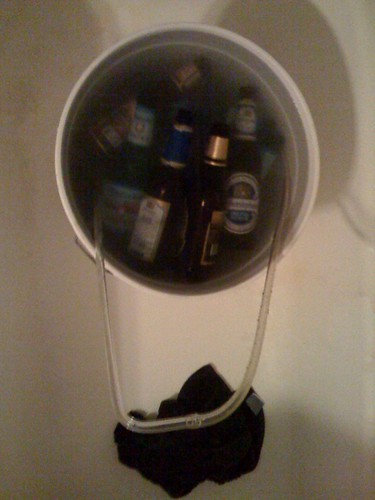
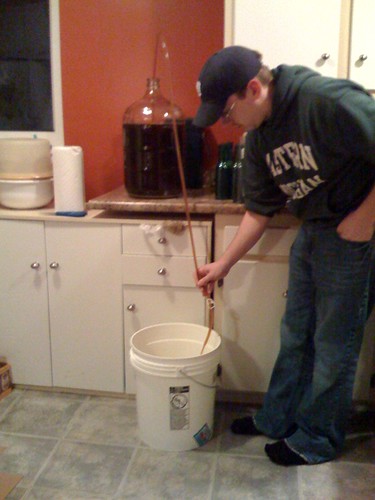
Syphon the beer from the carboy into the bottling bucket, which in our case is the "deluxe" fermenter. See how much beer you can spill on the floor.
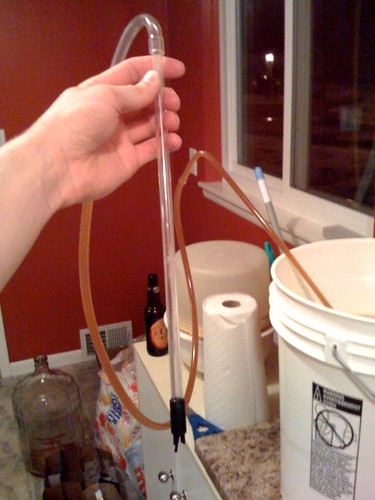
Here's the bottling wand. It has a flimsy valve in the bottom that likes to stick, giving you more opportunities to spill beer on the floor. It's also nice because your hands will smell like beer for about 12 hours after you use this.
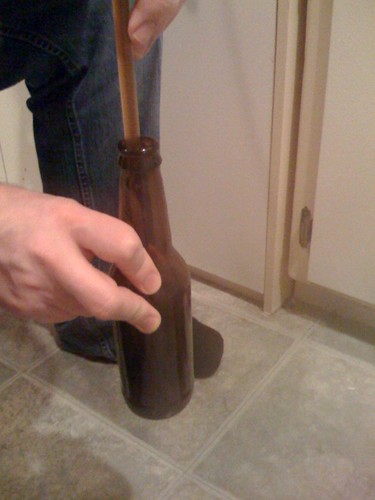
The bottling wand in action. Pretty exciting. Leave 1.5 inches or so of air at the top of the bottle when filling it.
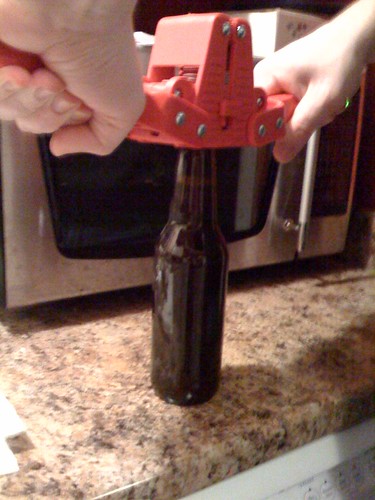
Cap your bottles with this device that looks sort of like a Snood character with long arms. Make sure that you've sanitized your caps and you have more caps available than bottles in case some of them get messed up.
Take a little sample while you're at it.
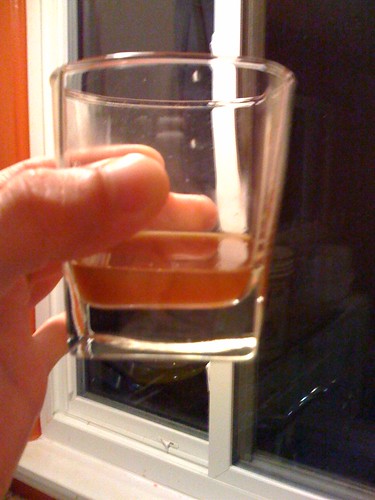
Look for a review of my own beer in the coming weeks.

But what's more important is that 49 bottles of pale kinda chocolatey stout are now carbonating in bottles in a basement in Redford, Michigan. The best part is that the beer smells like Count Chocula. A non-carbonated room-temperature taste test indicates a mild chocolatey, sort of creamy flavor with very little hop bitterness. If our calculations are right, it's around 6% alcohol. Oh and we're probably going to call it Count Chocustout.
Sanitize your bottles (no twist-offs!), bottling bucket, racking cane, bottling wand, etc. Properly sanitizing everything
Syphon the beer from the carboy into the bottling bucket, which in our case is the "deluxe" fermenter. See how much beer you can spill on the floor.
Here's the bottling wand. It has a flimsy valve in the bottom that likes to stick, giving you more opportunities to spill beer on the floor. It's also nice because your hands will smell like beer for about 12 hours after you use this.
The bottling wand in action. Pretty exciting. Leave 1.5 inches or so of air at the top of the bottle when filling it.
Cap your bottles with this device that looks sort of like a Snood character with long arms. Make sure that you've sanitized your caps and you have more caps available than bottles in case some of them get messed up.
Take a little sample while you're at it.
Look for a review of my own beer in the coming weeks.
Tuesday, February 3, 2009
Homebrewing adventures: Pale chocolatey stout part two
Last weekend (the 25th), we decided to transfer the beer into the secondary fermenter. It definitely smells like alcohol now, so that's a fun surprise. As you can see in the last photo, it's quite pale for a stout. Note from the editor: The stats in my Google Analytics account tell me that you guys aren't really into these beer brewing tales, so they'll no longer be Tuesday features -- just a little something extra.
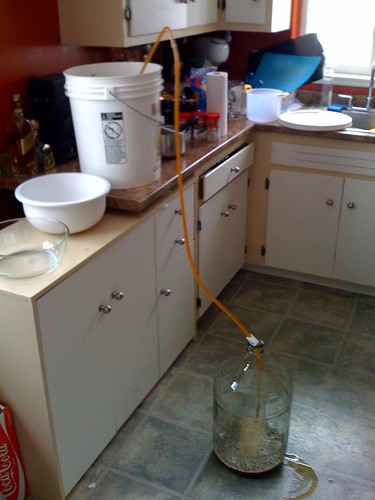
Siphon the beer from the primary fermenter into the "carboy" (secondary fermenter). This usually takes a few tries and you're guaranteed to get some partially fermented beer on the floor. Get a dog to lick it up.
Yeast sludge in the bottom of the "deluxe" primary fermenter. Perhaps we should have made some Vegemite with this.

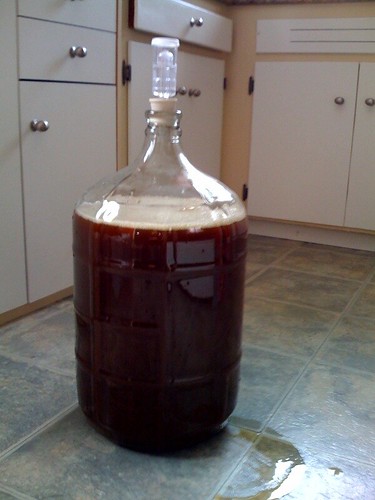
The carboy all full and sealed up with the air lock. This lets the beer continue fermenting without sitting on a bunch of yeast sludge.
See Homebrewing adventures part one >
Siphon the beer from the primary fermenter into the "carboy" (secondary fermenter). This usually takes a few tries and you're guaranteed to get some partially fermented beer on the floor. Get a dog to lick it up.
Yeast sludge in the bottom of the "deluxe" primary fermenter. Perhaps we should have made some Vegemite with this.
The carboy all full and sealed up with the air lock. This lets the beer continue fermenting without sitting on a bunch of yeast sludge.
See Homebrewing adventures part one >
Monday, January 19, 2009
Homebrewing adventures: The first ever pale (and kinda chocolaty) stout
Once upon a time in a land far far away (Ypsilanti, MI), my roommate and I decided we needed to start brewing beer in our apartment. So one Saturday morning, we ventured to the supply shop, bought a bunch of equipment and an "everything you need in one box" kit to make some Oktoberfest. It turned out pretty well, minus the fact that we added too much water, thus creating the first ever "Oktoberfest Lite." As we brewed successive batches of different beers, we became more confident, and experimented a bit. There was debate about which of our beers was the best -- Ian liked one because it tasted like apples, but I told him that was because we probably didn't disinfect everything properly and contamination can lead to an apple-y taste (this is true).
Our last (failed) endeavor was to make a chocolate stout. We went to the store to get what we needed, forgot to grab some things, and then the bags of grain broke open in the parking lot and a surprising amount of grains went into my shoes. We soon moved out of that apartment and went our separate ways, with Ian keeping the cat in exchange for me keeping the brewing equipment.
Over the past two or three years every time we got together, we'd say "we should brew some beer soon." Well, we were just spewing hot air -- until this weekend. Our brew features chocolate malt, and LOTS of pale malt extract, so we expect it to be light in color and heavy in alcohol. Here's what happens on homebrewing day one (and look for progress updates over the coming weeks).
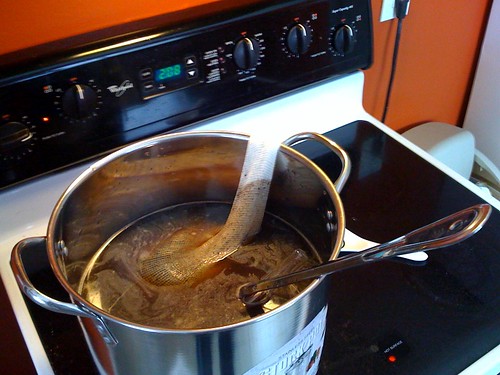
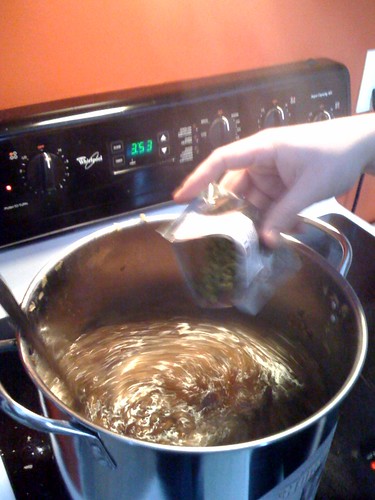
Steep the grains in the sock thing (don't use a real sock, please) until the water reaches 170º. There are two gallons of purified water in the pot.
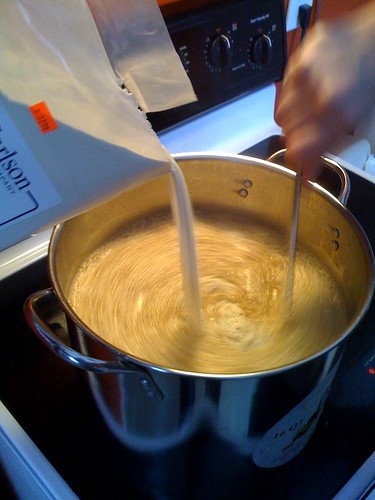
Add the malt extract once the water has boiled, then wait 'til it begins to boil again. It will probably boil over at least three times.
Add bittering hops then boil for 55 minutes while stirring incessantly so that sticky malt sludge doesn't burn onto the bottom of the pot.
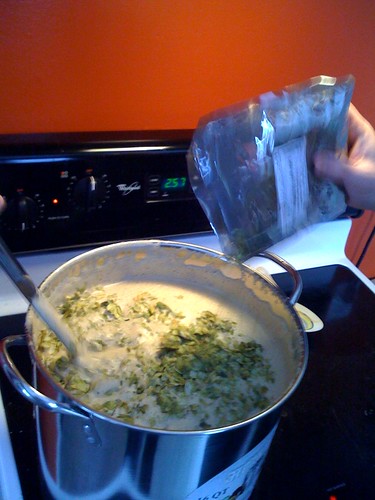
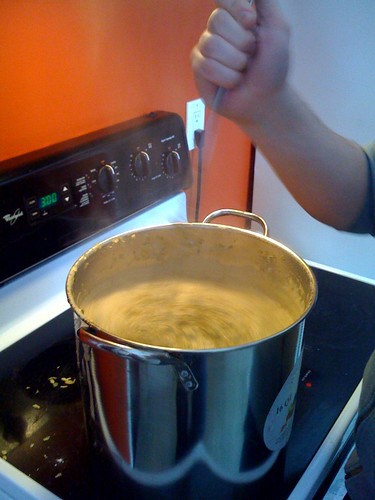
Add finishing hops and boil for five more minutes.
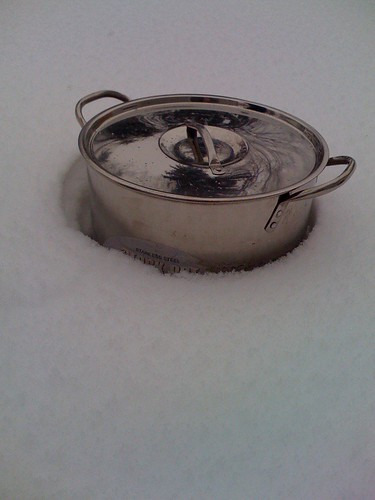
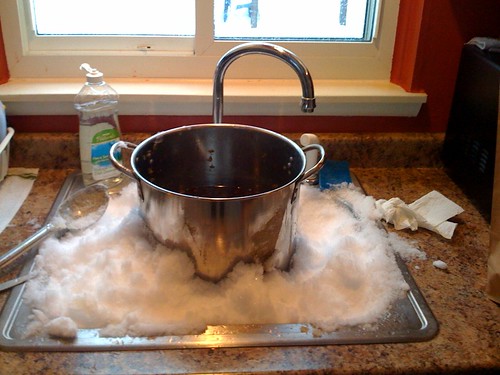
Cool rapidly to 70º. We have not successfully cooled the wort (pre-beer stew) rapidly, ever. And no, we usually don't leave the lid on. We just didn't want a squirrel to get in there.
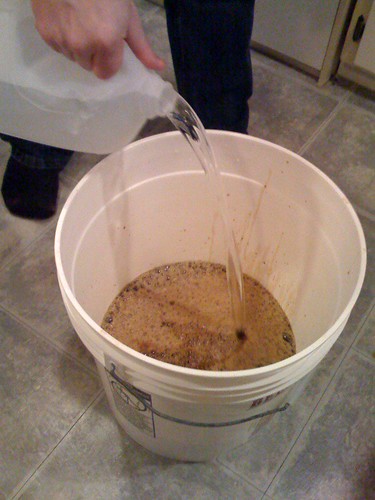
Add three more gallons of purified water to the wort in the fermenter. The prior two gallons have boiled down significantly. Add the yeast.
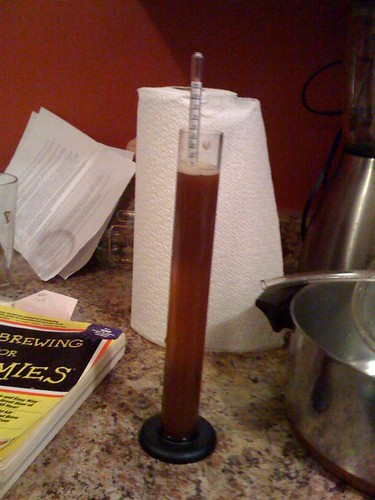
Use a hydrometer to determine the wort's "original gravity" to help determine alcohol content later on. Now you know what the "high gravity" comes from on your favorite malt liquor's label. And yes, you can see "Homebrewing for Dummies" here.
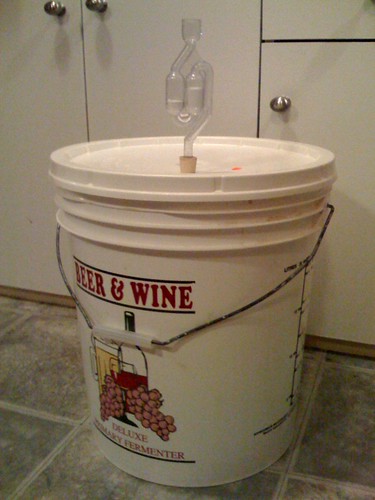
Seal up the "deluxe fermenter" and secure the airlock. Be nervous that it's not going to work until it starts bubbling the next day, then call your friends and brag.
See Homebrewing adventures part two >
Our last (failed) endeavor was to make a chocolate stout. We went to the store to get what we needed, forgot to grab some things, and then the bags of grain broke open in the parking lot and a surprising amount of grains went into my shoes. We soon moved out of that apartment and went our separate ways, with Ian keeping the cat in exchange for me keeping the brewing equipment.
Over the past two or three years every time we got together, we'd say "we should brew some beer soon." Well, we were just spewing hot air -- until this weekend. Our brew features chocolate malt, and LOTS of pale malt extract, so we expect it to be light in color and heavy in alcohol. Here's what happens on homebrewing day one (and look for progress updates over the coming weeks).
Steep the grains in the sock thing (don't use a real sock, please) until the water reaches 170º. There are two gallons of purified water in the pot.
Add the malt extract once the water has boiled, then wait 'til it begins to boil again. It will probably boil over at least three times.
Add bittering hops then boil for 55 minutes while stirring incessantly so that sticky malt sludge doesn't burn onto the bottom of the pot.
Add finishing hops and boil for five more minutes.
Cool rapidly to 70º. We have not successfully cooled the wort (pre-beer stew) rapidly, ever. And no, we usually don't leave the lid on. We just didn't want a squirrel to get in there.
Add three more gallons of purified water to the wort in the fermenter. The prior two gallons have boiled down significantly. Add the yeast.
Use a hydrometer to determine the wort's "original gravity" to help determine alcohol content later on. Now you know what the "high gravity" comes from on your favorite malt liquor's label. And yes, you can see "Homebrewing for Dummies" here.
Seal up the "deluxe fermenter" and secure the airlock. Be nervous that it's not going to work until it starts bubbling the next day, then call your friends and brag.
See Homebrewing adventures part two >
Subscribe to:
Comments (Atom)
 Dig this blog!